
Perfect Panettone: Classic Italian Recipe with Raisins and Candied Fruit
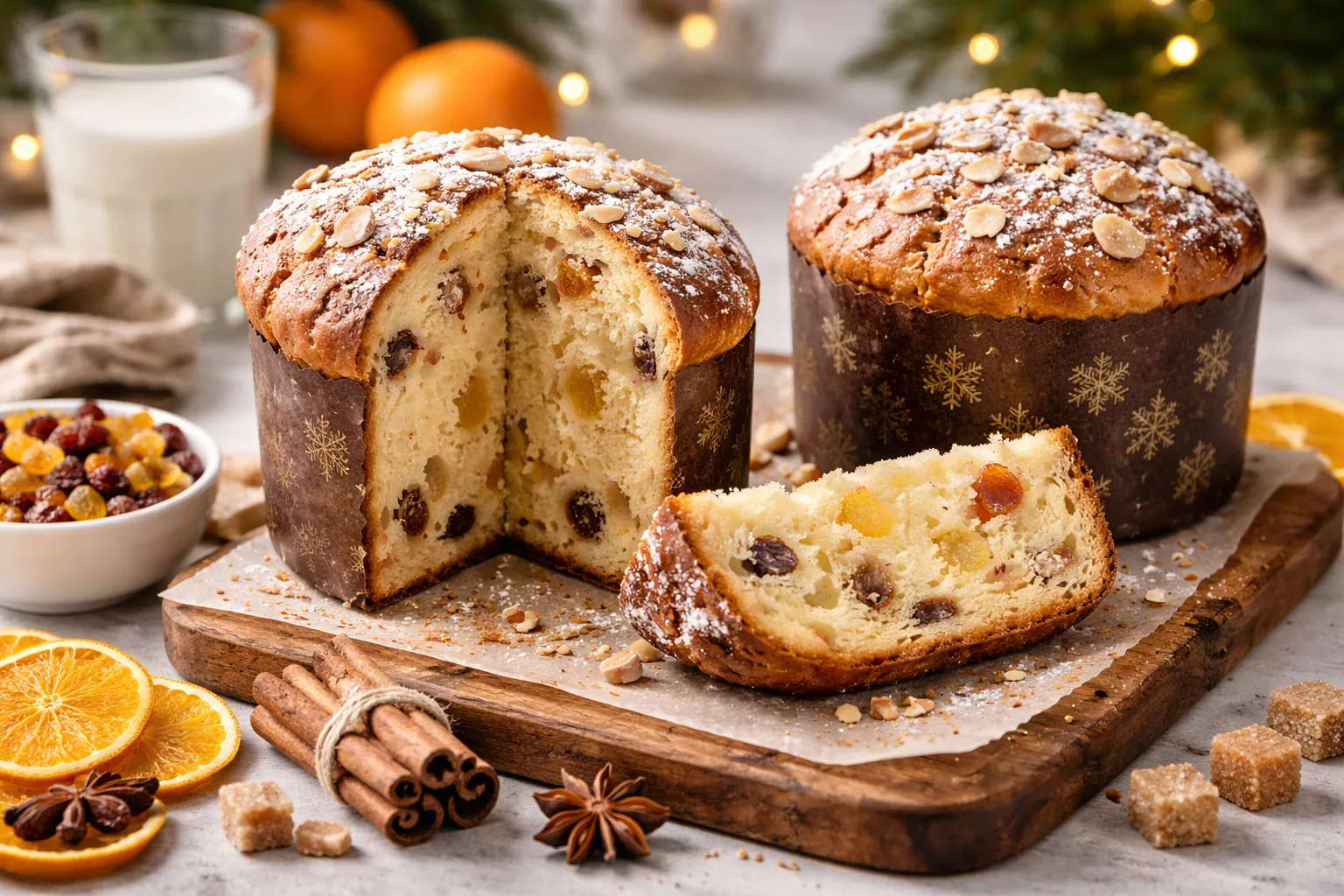
Learn how to bake a traditional Italian Panettone at home! This soft and fluffy sweet bread is filled with raisins, candied fruits, and aromatic citrus zest, making it perfect for Christmas or any festive occasion. With easy-to-follow steps and simple ingredients, you can enjoy the authentic taste of Italy in every bite.
Ingredients
Instructions
Place the yeast in warm milk with a small amount of sugar for 10 minutes.
In a large bowl, mix together the flour, sugar, vanilla, and, if desired, aromatic spices.
Add melted butter and eggs to the flour, as well as milk with activated yeast.
Start kneading the dough, adding candied fruit, dried fruits, and, if desired, zest. Continue kneading until you get a soft, elastic dough.
Cover the bowl with a towel and leave the dough to rise for 1-2 hours in a warm place until it doubles in size.
After rising, transfer the dough to a work surface and knead again to incorporate air.
Divide the dough into two portions and shape each into the respective panettone forms.
Transfer the dough into the pans and let it rest for another 30-40 minutes for the second rise.
Preheat the oven to 180°C (350°F).
After the second rise, place the panettone in the oven and bake for 30-40 minutes, or until they are golden brown on top.
After baking, remove the panettone from the oven and let them cool before serving.
If desired, you can decorate the panettone with glaze or sprinkle with powdered sugar before serving.
Perfect Panettone: Secrets to the Classic Italian Christmas Bread
What is Panettone?
Panettone is one of the most iconic Italian Christmas breads. It is instantly recognizable by its tall, domed shape and soft, fluffy interior. Originating from Milan, this festive bread has become a symbol of holiday celebrations worldwide. Unlike regular sweet breads, Panettone has a delicate texture and subtle sweetness. This makes it perfect for breakfast or dessert. Its unique flavor comes from raisins, candied fruit, and aromatic citrus zest. These ingredients are carefully folded into the dough after the initial fermentation.
A Rich History
The history of Panettone is as rich as its taste. Legends suggest it was first made in the 15th century for Milanese nobility. Over time, it became a staple of Christmas celebrations. Each family often developed its own variation. Traditionally, the dough rises for several hours, creating its airy structure. Natural yeast, combined with careful kneading and folding, ensures every bite is light and soft.
The Baking Ritual
What makes Panettone special is not just its flavor but also the baking ritual. Many Italian families pass down techniques for generations. They emphasize patience and attention to detail. The bread is baked in tall cylindrical molds. This allows it to rise upward instead of spreading out. Once baked, Panettone may be brushed with butter or dusted with powdered sugar. This adds a delicate finishing touch.
Cultural Significance
Panettone also has cultural significance. In Italy, it is often given as a gift during the holidays. It symbolizes warmth, prosperity, and sharing. Its popularity has spread worldwide. Modern variations include chocolate, cream fillings, and even savory adaptations. Despite these innovations, traditional Panettone remains beloved for its classic combination of fruit, dough, and aroma.
Enjoying Panettone
Eating Panettone is more than enjoying bread; it is experiencing Italian tradition. Served with coffee, hot chocolate, or dessert wine, it brings a festive atmosphere to the table. Its timeless appeal ensures that this sweet bread remains a centerpiece of holiday celebrations. It connects people to centuries of culinary heritage.
Часті запитання

You might also like