
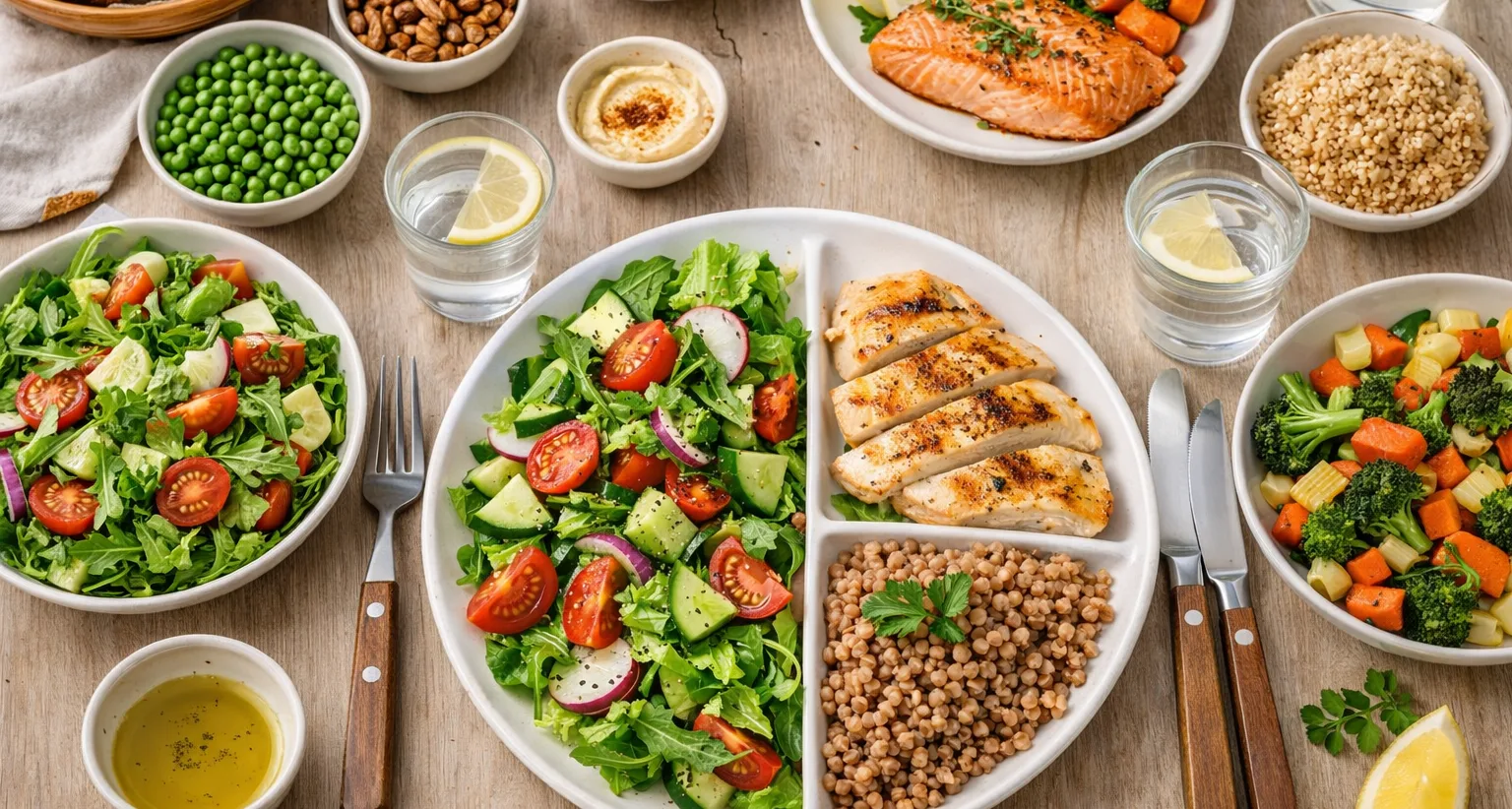
In today’s fast-paced world, lunch often turns into a quick bite eaten between meetings, school runs, and endless to-do lists. But lunch is actually one of the most important meals of the day. It fuels your body for the afternoon, supports focus and productivity, stabilizes mood, and helps maintain overall well-being.
The balanced plate method is a simple, visual approach to building a healthy family lunch without counting calories or following complicated diet rules. It’s practical, flexible, and works for both adults and children.
What Is the Balanced Plate Method?
The balanced plate method is a visual guide that helps you divide your plate in a way that provides all essential macronutrients: protein, carbohydrates, and healthy fats — along with fiber, vitamins, and minerals.
The easiest way to follow it is this simple formula:
½ vegetables + ¼ protein + ¼ complex carbohydrates
This principle works for the whole family (with portion sizes adjusted for age, activity level, and individual needs).
Instead of focusing on restrictions, the balanced plate approach focuses on proportions — making healthy eating more sustainable and realistic.
1. Half Your Plate: Vegetables
Vegetables form the foundation of a healthy lunch. They are rich in fiber, antioxidants, vitamins, and minerals. Fiber supports digestion, helps regulate blood sugar levels, and keeps you feeling full longer.
Great vegetable options include:
- Fresh salads (lettuce, arugula, cucumbers, tomatoes, bell peppers)
- Roasted vegetables (broccoli, cauliflower, carrots, zucchini)
- Grilled vegetables
- Steamed greens
- Fermented vegetables (like sauerkraut or kimchi) for natural probiotics
For family meals, the “eat the rainbow” principle works beautifully. The more colors on the plate, the broader the range of nutrients.
Tip for kids: If your child resists vegetables, experiment with textures. Try creamy vegetable soups, roasted veggie sticks, or homemade veggie patties.
2. One Quarter: Protein
Protein is essential for muscle development, immune function, hormone production, and long-lasting satiety. Including protein at lunch helps prevent afternoon energy crashes and sugar cravings.
High-quality protein sources include:
- Chicken or turkey breast
- Lean beef or veal
- Fish (especially fatty fish like salmon or mackerel)
- Eggs
- Legumes (lentils, chickpeas, beans)
- Greek yogurt or cottage cheese
- Tofu and other plant-based proteins
For busy families, it’s helpful to prepare a versatile protein base — such as baked chicken or cooked lentils — that can be paired with different sides throughout the week.
3. One Quarter: Complex Carbohydrates
Carbohydrates often get a bad reputation, but they are the body’s primary energy source. The key is choosing complex carbohydrates, which digest more slowly and provide steady energy.
Healthy complex carb options include:
- Brown rice
- Quinoa
- Buckwheat
- Bulgur
- Whole-grain pasta
- Baked potatoes
- Whole-grain bread
Unlike refined carbs (white bread, sugary snacks), complex carbohydrates contain fiber and micronutrients that support overall health.
When combined with protein and vegetables, they create a balanced meal that prevents sharp spikes and crashes in blood sugar levels.
4. Don’t Forget Healthy Fats
Healthy fats may not take up a visible portion of the plate, but they are an important part of a balanced lunch.
Good sources of healthy fats include:
- Extra virgin olive oil
- Avocado
- Nuts and seeds
- Fatty fish
Fats help the body absorb fat-soluble vitamins (A, D, E, and K) and make meals more satisfying and flavorful.
A drizzle of olive oil over a salad or a few slices of avocado can significantly improve both nutrition and taste.
What Does a Balanced Family Lunch Look Like?
Here are two simple examples:
Option 1:
- Half plate: green salad with tomatoes, cucumbers, leafy greens, and olive oil
- Quarter plate: baked chicken breast
- Quarter plate: buckwheat or brown rice
- Add: a spoonful of seeds or a few avocado slices
Option 2:
- Roasted mixed vegetables
- Baked salmon
- Quinoa
The key is maintaining the proportion — not perfection.
Why the Balanced Plate Method Works
This approach helps you:
- Avoid overeating
- Maintain stable energy levels
- Reduce sugar cravings
- Support healthy eating habits in children
- Simplify daily meal planning
When a meal includes protein, fiber, and complex carbohydrates, digestion slows down in a healthy way. This leads to gradual energy release rather than sudden spikes and crashes.
How to Make It Work for Kids
With children, presentation matters as much as nutrition. Try creating a “build-your-own plate” setup where kids can choose from pre-selected vegetables, proteins, and grains. This increases independence and reduces resistance.
Children need smaller portions, but the same proportions apply.
Avoid forcing kids to finish their plates. Instead, help them learn to recognize hunger and fullness cues — an important skill for lifelong healthy eating.
Common Lunch Mistakes
- A large portion of pasta with no vegetables
- Soup without a protein source
- A salad without protein
- Heavy sauces with hidden sugars
- Skipping carbs entirely
Balance is about consistency, not perfection. If one meal isn’t perfectly balanced, that’s okay. What matters most is the overall pattern.
Do You Need to Count Calories?
For most families, calorie counting isn’t necessary. The visual plate model is simple, intuitive, and effective.
Calorie tracking may be helpful in specific situations (such as athletic training or medically supervised weight loss), but for everyday family nutrition, the balanced plate method is more practical and sustainable.
Final Thoughts
The balanced plate method isn’t a diet — it’s a flexible framework for building healthy meals without stress.
An ideal family lunch doesn’t require complicated recipes or expensive ingredients. It’s about combining simple, wholesome foods in the right proportions:
Half vegetables, one quarter protein, one quarter complex carbohydrates.
Follow this principle consistently, and you’ll support better energy, improved well-being, and healthier habits for the whole family.
If you’re looking for an easy way to upgrade your daily meals, start with your plate — and build balance from there.