
Niçoise salad
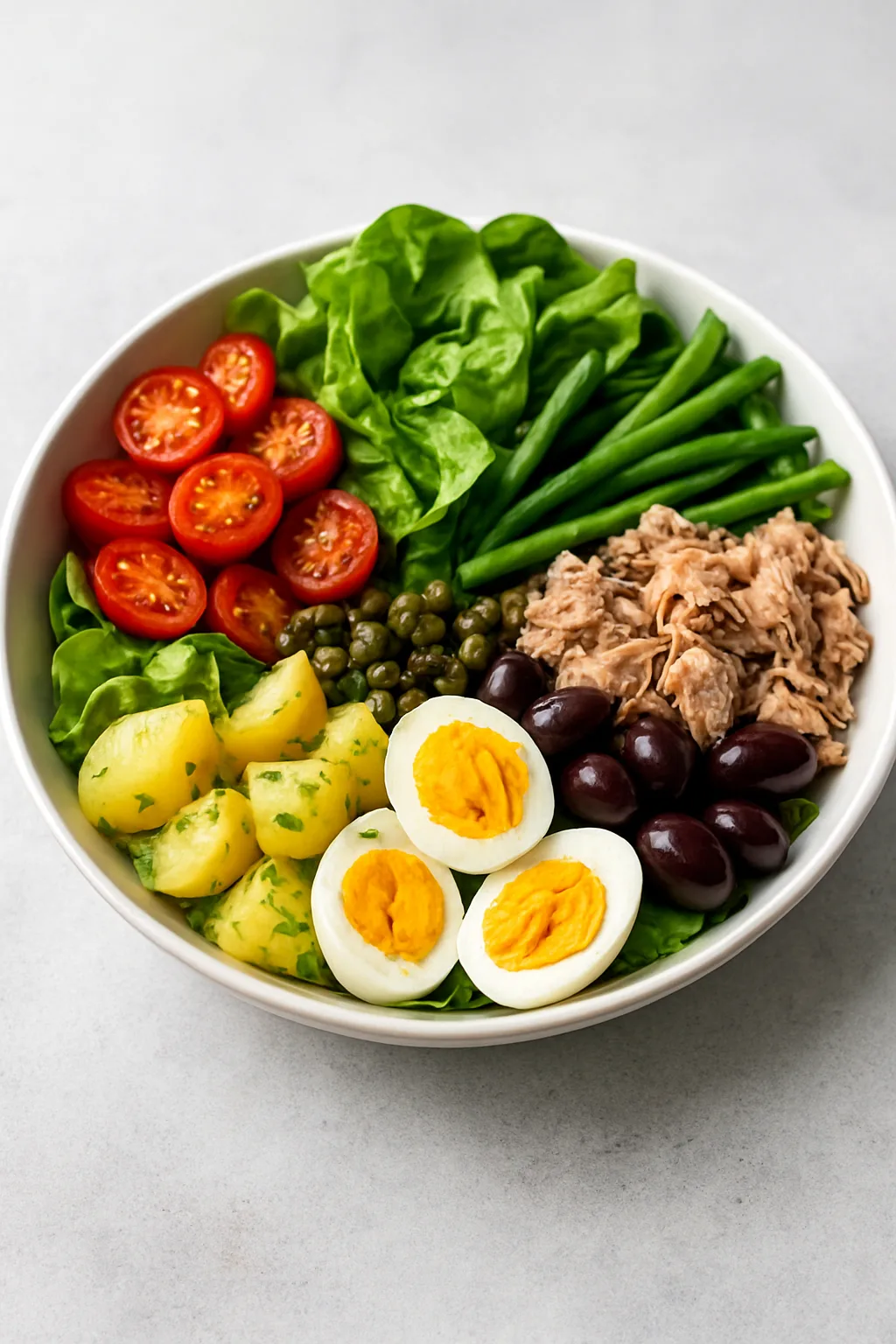
Niçoise Salad is a vibrant and satisfying French dish, combining crisp lettuce, tender tuna, boiled eggs, green beans, tomatoes, olives, and potatoes. Dressed with a light vinaigrette, it perfectly balances freshness, flavor, and texture. This salad is ideal for a healthy lunch, a light dinner, or an elegant starter for any occasion. Its colorful presentation makes it as appealing to the eyes as it is to the palate.
Ingredients
Instructions
Preparing the ingredients:
Boil the potatoes in their skins until cooked, let them cool, and cut into medium-sized pieces.
Boil the green beans in salted water for 5–7 minutes until tender, then rinse them with cold water.
Boil the eggs, let them cool, and cut them in half.
Cut the cherry tomatoes in half.
Mixing:
In a large bowl, combine the lettuce leaves, green beans, cherry tomatoes, olives, potatoes, and tuna, cut into pieces.
Preparing the dressing:
In a small bowl, combine the Dijon mustard, olive oil, lemon juice, salt, and pepper. Mix well until smooth.
Serving:
Drizzle the dressing over the salad and gently toss.
Place the halved boiled eggs on top of the salad.
Garnish:
Optional: you can add a few extra ingredients for garnish, such as capers or anchovies.
The Story of Niçoise Salad
Origins of a French Classic
Niçoise Salad is a legendary dish from the city of Nice in the south of France. Traditionally, it was a simple, rustic meal enjoyed by fishermen and locals along the Mediterranean coast. The salad highlighted fresh, seasonal ingredients: tomatoes, olives, green beans, potatoes, eggs, and tuna. Its simplicity and reliance on fresh produce captured the essence of Provençal cuisine, making it both flavorful and nourishing. Today, it remains a symbol of French culinary tradition and a popular choice in restaurants worldwide.
Key Ingredients and Balance
What makes Niçoise Salad so special is its balance of flavors and textures. Crisp lettuce or mixed greens form the base, providing freshness and crunch. Tender tuna offers a rich, protein-packed component, while hard-boiled eggs add creaminess and heartiness. Green beans and potatoes contribute a satisfying bite, and ripe tomatoes and olives introduce brightness and a slight tang. A light vinaigrette ties all the ingredients together, enhancing their natural flavors without overpowering them. Each component is carefully arranged, often in neat sections, making the salad visually appealing as well as delicious.
Evolution and Modern Variations
While the classic recipe is still widely appreciated, Niçoise Salad has evolved over time. Some modern versions use seared tuna or include additional vegetables, such as bell peppers or artichokes. Anchovies are sometimes added for a traditional touch, and various dressings—from mustard vinaigrette to lemon-olive oil blends—enhance the taste. Despite these changes, the core idea remains: a balanced, colorful, and nutrient-rich salad that reflects the freshness of the French Riviera.
Why It Endures
Niçoise Salad endures because it combines simplicity with elegance. It is light yet filling, visually striking, and full of contrasting textures. Perfect for lunch, a light dinner, or as part of a buffet, the salad appeals to both casual eaters and gourmet enthusiasts. Each bite tells a story of fresh Mediterranean ingredients and traditional French culinary craftsmanship.
Cultural Significance Today
Beyond its taste, Niçoise Salad represents a connection to French culture and the Mediterranean lifestyle. It encourages the use of fresh, local produce, celebrates balance in nutrition, and showcases the art of presentation. Whether served at home or in a restaurant, this salad continues to inspire chefs and home cooks alike, maintaining its status as a timeless, healthy, and colorful dish.
Часті запитання