Many people assume that simply swapping sugar for honey or stevia automatically makes baked goods healthier. In reality, it’s not that simple. One substitute can make a cake moist and tender, another can leave it dry, while some create an unusual aftertaste or prevent baked goods from developing that beautiful golden crust.
To understand which sugar alternative actually works, you need to know one important fact: sugar does much more than add sweetness.
Sugar Does More Than Sweeten
In baking, sugar plays several important roles:
- Retains moisture
- Creates a soft, tender texture
- Contributes to caramelization
- Helps form a golden-brown crust
- Extends freshness and shelf life
That’s why two ingredients with the same level of sweetness can produce completely different results in the oven.
What Happens When You Replace Sugar?
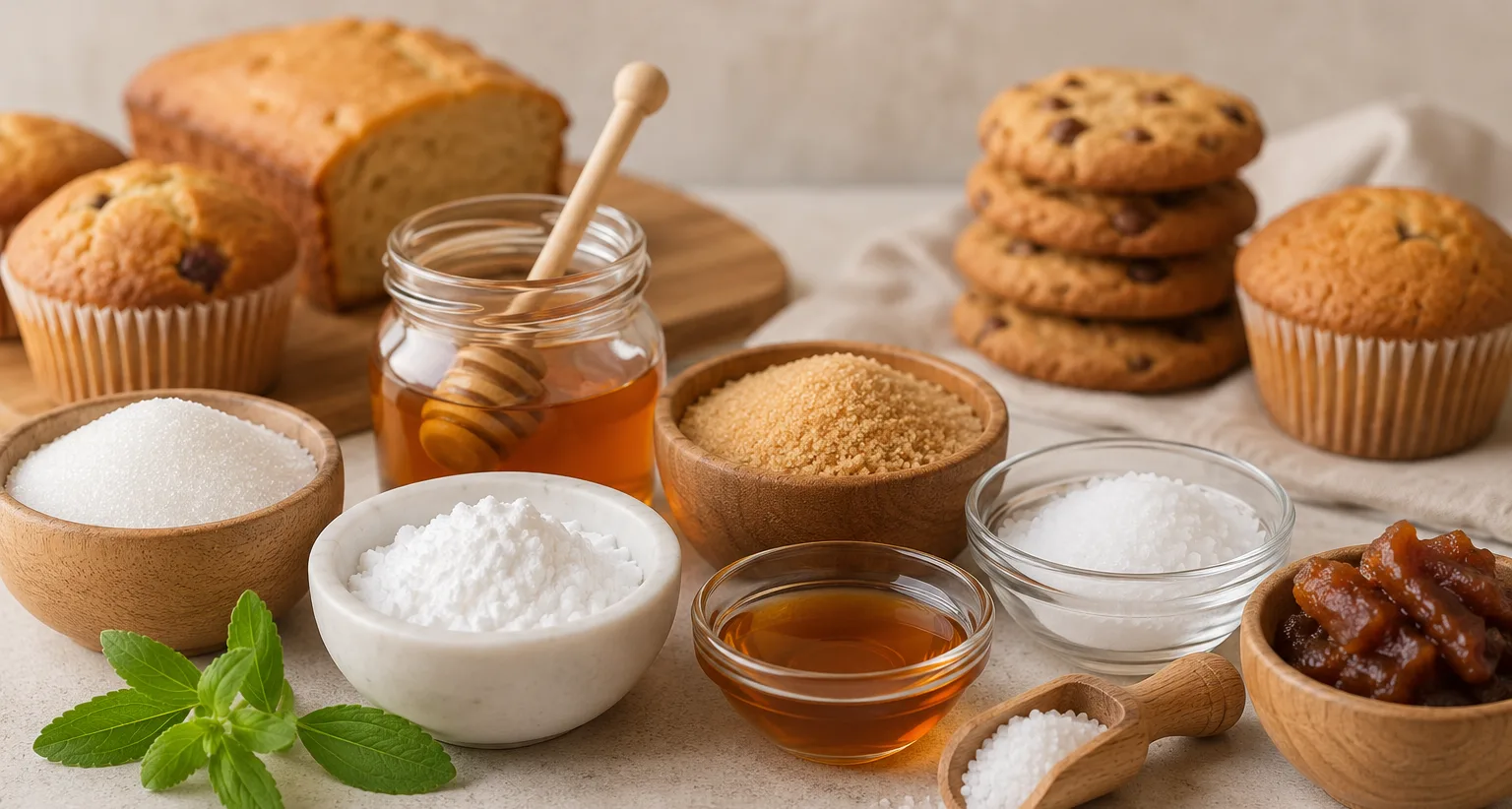
Imagine a muffin recipe that normally contains 100 grams of sugar. Replacing it with different sweeteners can dramatically change the final result.
Some alternatives create moist, flavorful baked goods, while others affect color, texture, or structure. Surprisingly, not every “healthy” sweetener performs well in baking.
Honey: Best for Moist Cakes and Muffins
Honey contains natural fructose and glucose, which help retain moisture.
Benefits
✔ Keeps baked goods soft for longer
✔ Adds a richer flavor
✔ Creates a beautifully browned crust
Drawback
Although honey contains trace nutrients, many of them are reduced during baking due to high temperatures. For this reason, honey shouldn’t automatically be considered a completely healthy replacement for sugar.
Date Paste: The Underrated Favorite
Date paste is one of the most versatile sugar substitutes for home baking.
Unlike refined sugar, dates naturally contain:
- Fiber
- Potassium
- Magnesium
- Polyphenol antioxidants
The fiber helps slow the absorption of sugars and provides a more balanced nutritional profile.
Best For
- Chocolate muffins
- Banana bread
- Oatmeal cookies
- Homemade snack bars
Many bakers overlook date paste, yet it often delivers better texture and flavor than more popular sweeteners.
Erythritol: The Low-Calorie Champion
If reducing calories is your goal, erythritol remains one of the best options.
It contains virtually no calories and has minimal impact on blood sugar levels.
The Catch
Baked goods made with erythritol often appear paler because it doesn’t caramelize like regular sugar.
This is why many bakers combine erythritol with a small amount of honey, maple syrup, or fruit puree to improve color and texture.
Stevia: Extremely Sweet but Tricky
Stevia is dozens of times sweeter than sugar.
At first glance, it sounds like the perfect substitute.
However, stevia adds sweetness without providing volume or structure.
If you replace all the sugar in a muffin recipe with stevia, the result may be dense and heavy rather than light and fluffy.
Applesauce: America’s Baking Secret
Unsweetened applesauce is commonly used in American baking as a substitute for both sugar and part of the fat.
Pros
- Lower calorie content
- More moisture
- Natural sweetness
Cons
- Milder flavor
- Not ideal for crispy cookies
It works especially well in muffins, quick breads, and snack cakes.
Coconut Sugar: Healthy or Just Marketing?
Coconut sugar is often marketed as a healthier alternative to regular sugar.
In reality, its calorie content is very similar to white sugar.
While it contains small amounts of minerals, the difference is not significant enough to consider it a superfood.
Its biggest advantage is its pleasant caramel-like flavor, which works beautifully in cookies and spice cakes.
The Most Common Mistake When Replacing Sugar
Many people make a direct one-to-one substitution:
- 100 g sugar = 100 g honey
- 100 g sugar = 100 g syrup
Unfortunately, this often results in batter that is too wet, sticky, or dense.
Quick Conversion Guide
For every 100 g (½ cup) of sugar, use approximately:
- Honey: 75–80 g
- Maple syrup: 80 ml
- Erythritol: 120 g
- Date paste: 100 g
- Applesauce: 100–120 g
Which Sugar Substitute Is Best?
The answer depends on your goal.
- For flavor and texture: Honey
- For a more nutritious option: Date paste
- For fewer calories: Erythritol
- For everyday muffins and cakes: Applesauce
Interestingly, many experienced bakers don’t rely on a single substitute. Instead, they replace only part of the sugar with ingredients such as date paste or applesauce. This approach helps preserve the texture and structure of baked goods while reducing added sugar without sacrificing flavor.