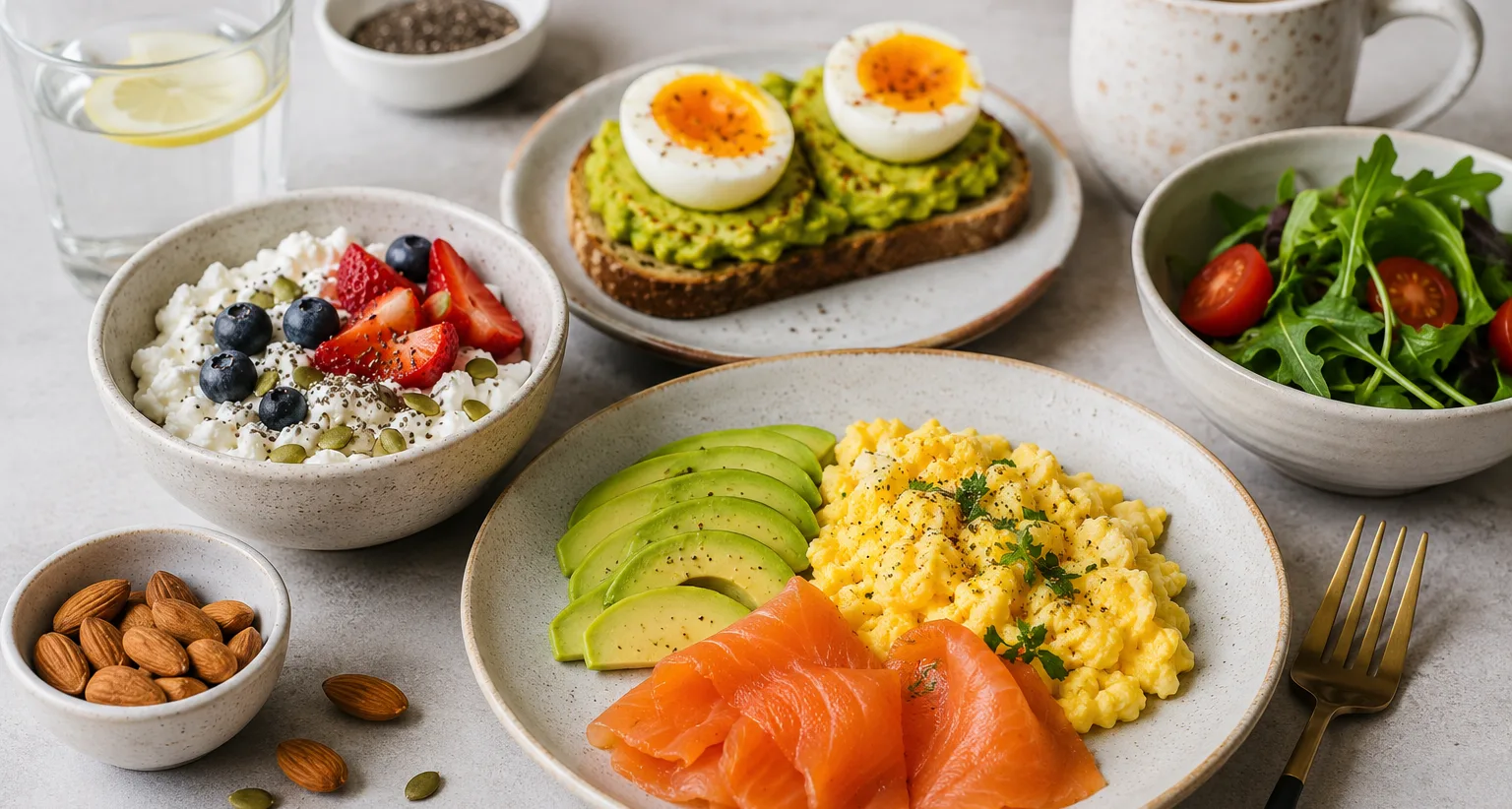
A high-protein breakfast is one of the most effective ways to improve energy levels, control appetite, and support overall well-being throughout the day.
Scientific research shows that a protein-rich breakfast can:
- reduce hunger throughout the day
- decrease cravings for sweets
- improve focus and concentration
- stabilize blood glucose levels
For most adults, the optimal amount of protein at breakfast is 20–35 grams.
This can easily be achieved using simple, everyday foods without complicated recipes.
Why a High-Protein Breakfast Works
After a night of fasting, blood sugar levels naturally drop. If you eat a breakfast based mainly on refined carbohydrates (such as cookies, sweet cereals, or pastries), it can cause a rapid spike in blood glucose followed by a sharp drop — leading to fatigue and renewed hunger.
Protein works differently:
- digests more slowly
- reduces blood sugar spikes
- activates satiety hormones (GLP-1, PYY)
- provides longer-lasting energy
7 Perfect High-Protein Breakfasts (With Exact Portions)
1. “Balanced Omelet”
Protein: ~25–30 g
Ingredients:
- 2 eggs (≈12 g protein)
- 100 g egg whites or 2 additional egg whites (≈10–11 g protein)
- 50 g cheese (≈7–10 g protein)
- 100 g vegetables
How to make it:
Mix eggs and egg whites, add vegetables, and cook for 5–7 minutes in a non-stick pan.
2. Greek Yogurt Protein Bowl
Protein: ~25–30 g
Ingredients:
- 200 g Greek yogurt (≈18–20 g protein)
- 20 g nuts (≈4–5 g protein)
- 1 tbsp chia seeds (≈3 g protein)
- 100 g berries
3. Cottage Cheese + Egg + Vegetables
Protein: ~30 g
Ingredients:
- 150 g cottage cheese (≈20–25 g protein)
- 1 egg (≈6 g protein)
- 150 g vegetables (cucumber, tomato, etc.)
4. Protein Smoothie (Quick Breakfast)
Protein: ~25–35 g
Ingredients:
- 250 ml milk or kefir (≈8–10 g protein)
- 1 banana
- 1 scoop protein powder (≈20–25 g protein)
- 30 g oats (≈4 g protein)
5. Protein Oatmeal (Savory or Neutral Version)
Protein: ~25 g
Ingredients:
- 50 g oats (≈6 g protein)
- 200 ml milk (≈7 g protein)
- 1 egg or 100 g egg whites (≈6–10 g protein)
- 10 g flax seeds
6. Chicken Lavash Wrap
Protein: ~30–35 g
Ingredients:
- 60 g lavash bread (≈5 g protein)
- 100 g chicken breast (≈22–25 g protein)
- 30 g cheese (≈6–7 g protein)
- greens and vegetables
7. Tuna Toast
Protein: ~30 g
Ingredients:
- 2 slices whole grain bread (≈6–8 g protein)
- 100 g tuna in water (≈23–25 g protein)
- yogurt or egg (≈5–6 g protein)
7-Day High-Protein Breakfast Plan
| Day | Breakfast | Protein |
|---|---|---|
| 1 | Omelet + vegetables | ~30 g |
| 2 | Greek yogurt bowl | ~28 g |
| 3 | Cottage cheese + egg | ~30 g |
| 4 | Protein smoothie | ~25–35 g |
| 5 | Protein oatmeal | ~25 g |
| 6 | Chicken wrap | ~30–35 g |
| 7 | Tuna toast | ~30 g |
Scientific Principles of an Ideal Breakfast
1. The 20–30 g Protein Rule
This is the range where:
- muscle protein synthesis is activated
- satiety significantly increases
- snacking cravings decrease
2. The “Protein + Fiber + Healthy Fats” Formula
A balanced breakfast should include:
- protein → fullness
- fiber → blood sugar control
- fats → stable energy release
3. Why Sugary Breakfasts Harm Energy Levels
High-sugar breakfasts (pastries, sweet cereals):
- cause rapid blood glucose spikes
- trigger an insulin “crash”
- lead to hunger within 1–2 hours
Common Mistakes in Breakfast Choices
- coffee + cookies only
- no protein intake
- excessive fruit without protein
- skipping breakfast (leading to overeating later)
How to Build the Habit
- prepare ingredients in advance
- keep protein staples in the fridge (eggs, yogurt, cottage cheese)
- combine simple ingredients
- avoid overcomplicating meals
Conclusion
A high-protein breakfast is not a diet or restriction — it’s a simple strategy to stabilize energy, reduce hunger, and improve daily productivity.
Even a basic combination of 2–3 ingredients can provide 25–30 g of protein and significantly improve how you feel throughout the day.